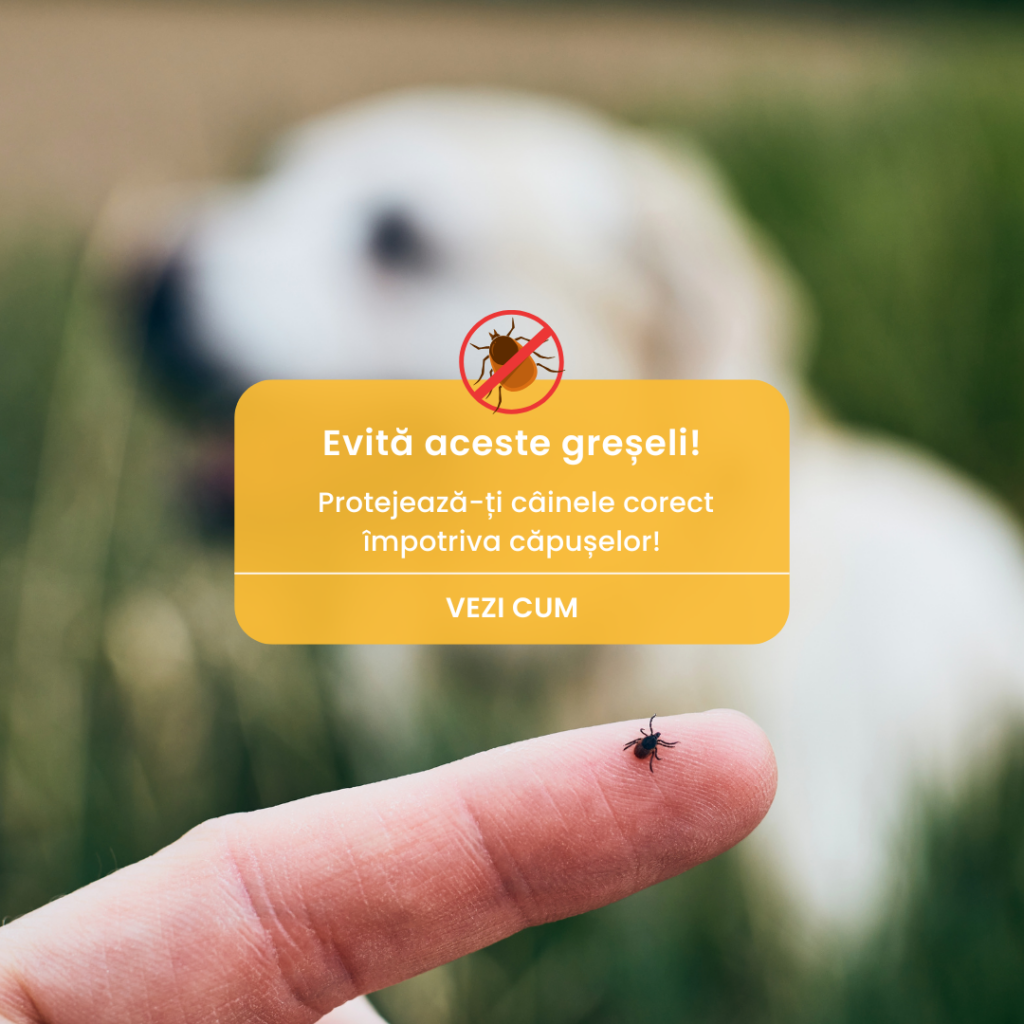
Spring brings longer days, warm sunshine and relaxing walks with your dog. But there’s an invisible threat lurking: ticks. These small but extremely dangerous creatures become more active as temperatures rise, turning parks, forests and even our own gardens into hunting grounds for our dogs’ blood. What happens if we ignore this threat? Let’s find out!

WHAT ARE TICKES AND WHY ARE THEY DANGEROUS?
Ticks are external parasites that feed on the blood of their hosts. The problem is not only the bite itself, but also the serious diseases they can transmit. Among the most dangerous diseases are:
- Babesiosis – a disease that attacks red blood cells, causing high fever, lethargy, and, in severe cases, kidney failure and death.
- Lyme disease – affects the joints, heart, and nervous system in both dogs and humans.
- Ehrlichiosis – can cause anemia, internal bleeding, and extreme weakness.
HOW DO WE IDENTIFY A TICK? WHAT DOES IT LOOK LIKE?
Ticks are small, but easy to recognize if you know what to look for. Here are some characteristics:
- Variable size – from a few millimeters (when not feeding) to the size of a pea (after feeding on blood).
- Oval or round body – before feeding, ticks are flat and oval; after they suck blood, they become more rounded and swollen.
- Brown, black or gray in color – depending on the species and how much blood they have ingested.
- Multiple legs – adult ticks have eight legs and a small, visible mouthpart used to attach to the skin.
Where are they hiding on dogs?
- Behind the ears
- On the neck and under the collar
- On the belly and between the paws
- At the base of the tail
If you discover a tick, it is essential to remove it correctly and completely to avoid infections!
HOW YOUR DOG CAN SUFFER AND THE SYMPTOMS OF THE BITE
Imagine you go for a relaxing walk with your dog through a park. Everything seems perfect. But when you return, an unseen enemy has already taken hold of his fur and is starting to feed. Within a few days, your dog becomes lethargic, refuses food, his urine is dark, his gums are pale, he may start to have a fever and lose weight noticeably. At this point, it may already be too late…
Ticks are not just a seasonal problem. They can remain active well into the fall and even mild winters. A single bite can lead to expensive treatments and prolonged suffering for your pet.
HOW CAN YOU PROTECT YOUR DOG?
✅ Apply regular antiparasitic treatments – pipettes, collars and oral tablets are the most effective methods of protection.
✅ Check your dog’s fur daily – after each walk in areas with vegetation, carefully inspect the fur, especially in sensitive areas (ears, neck, belly, paws).
✅ Take care of the space around the house – mow the grass, clean up the foliage, and avoid the accumulation of damp and dark areas where ticks can hide.
✅ Avoid walking in areas with tall grass – parks and forests are gorgeous, but also the main places where ticks wait for a host.
✅ Regular visits to the vet – a routine check-up can quickly detect problems and save your dog’s life.
WHAT HAPPENS IF YOU DON’T ACT IN TIME?
If you ignore this problem, the consequences can be devastating. At best, your dog will need expensive treatments and a long recovery. At worst, a simple walk in the park can turn into a tragedy.
Remember: you are the only barrier between your puppy and this danger. Protection is simple, and the consequences of negligence are too great to ignore.
Taking care of a dog is more than just food and play. It’s responsibility. Ticks are a real danger, but with a little attention and preventative measures, you can ensure a worry-free spring and summer for you and your furry friend.
Îngrijește-l azi, ca să-l ai sănătos mâine!